
Looking for a practical way to make your dog sharper and happier? Dog brain training is a simple, effective approach that gives your pet mentally stimulating challenges and measurable results. In this guide you’ll find easy techniques, toy and DIY ideas, scent work (nose work) games, and a sample schedule to fit into your day.
Adding canine cognition exercises to your routine helps dogs learn to solve problems, remember commands, and stay engaged. Regular brain work strengthens your bond with your pet, builds confidence, and reduces boredom-driven behaviors.
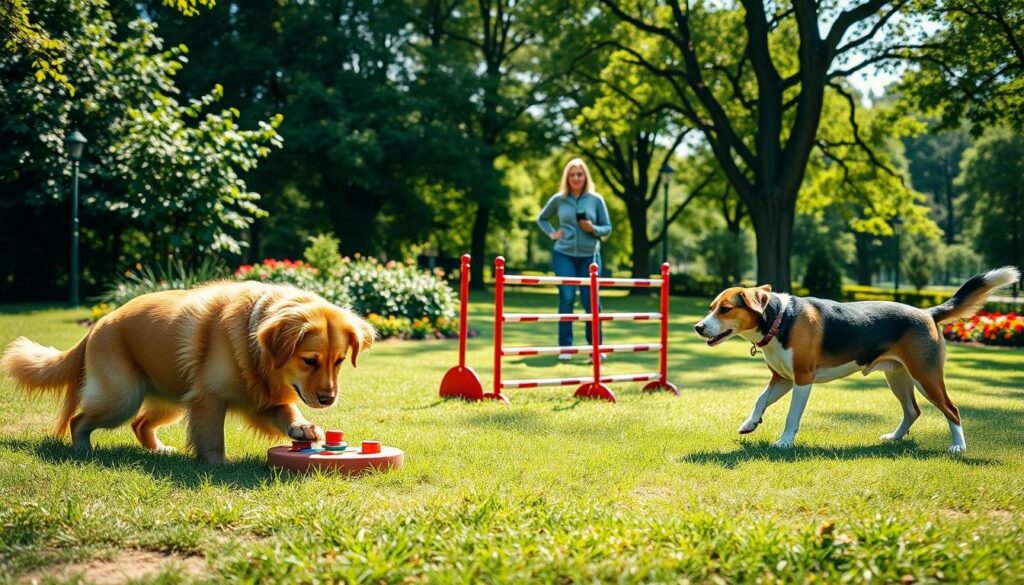
Exploring dog intelligence opens up a lot of fun options: interactive games, puzzle toys, and scent work are all great ways to keep your dog mentally active. There are activities for every dog—puppies, seniors, working breeds, and companion pets alike.
Key Takeaways
- Improve your dog’s problem-solving skills with engaging exercises
- Enhance your dog’s memory and mental agility with short daily sessions
- Strengthen your bond with your dog through interactive activities and play
- Discover techniques, toys, and scent games tailored to your dog’s age and breed
- Boost your dog’s confidence and responsiveness with consistent training
Understanding Canine Cognition
If you want to make your dog smarter, it helps to understand the basics of canine cognition — how dogs perceive the world and learn from it. Recent research in animal cognition shows that dogs use different senses and learning strategies than humans, and trainers can use that knowledge to design better, more effective brain training.
How Dogs Learn and Process Information
Dogs learn in multiple ways. Two especially important processes are associative learning (linking an action to a consequence) and observational learning (copying what they see another dog or person do). For example, a dog that gets a treat after sitting quickly learns to sit when asked; another dog may learn by watching that same rewarded behavior.
The Canine Learning Process
How well a dog learns depends on factors such as breed tendencies, early socialization, environment, and individual personality. Studies of domestic dogs regularly show that motivated, reinforced practice produces reliable gains — especially when training uses clear cues and immediate rewards. A practical takeaway: keep sessions short, consistent, and reward-based to help your dog generalize new skills.
“Dogs are able to learn complex tasks and behaviors through a combination of associative and observational learning.”
Differences Between Dog and Human Cognition
Dogs and humans process information differently. Dogs rely heavily on scent and hearing; smell is a primary channel for gathering detailed information. Humans rely more on vision and abstract reasoning. That difference is why scent-based exercises and auditory cues can be more effective than visual-only approaches for many dogs.
| Cognitive AbilityDogsHumans | ||
| Sensory Reliance | Scent, Auditory | Visual |
| Learning Style | Associative, Observational | Various, including abstract thinking |
The Science Behind Dog Intelligence
Researchers have made steady progress measuring canine cognition. Studies evaluate skills such as memory, problem-solving, social learning, and emotion recognition. While findings vary by study and method, the consistent message is that dogs are capable learners with measurable cognitive strengths.
Recent Research Findings
For example, several peer-reviewed studies have found that dogs can respond to human emotional cues and sometimes match their behavior to owners’ emotional states. (When republishing, include citations to primary sources such as journals like Animal Cognition or PNAS for specific claims.)
Measuring Canine Cognitive Abilities
Researchers and trainers use simple, standardized tests to evaluate aspects of dog cognition. Common assessments include problem-solving puzzle tests, object permanence tasks (like the cup game), and memory/recall trials. Two widely used approaches in the literature are short puzzle-based tasks that measure latency to solve and social-cognitive tests that measure response to human cues. These tests help identify strengths to target in training and skills that need more practice.
The Importance of Dog Brain Training
Dog brain training is one of the easiest ways to support your dog’s overall well‑being. Short, regular sessions provide mental stimulation that can improve behavior, lower anxiety, and boost confidence — all while strengthening the bond between you and your pet.
Mental Stimulation and Behavioral Improvements
Mental stimulation helps dogs channel energy into constructive tasks instead of destructive or attention‑seeking behaviors. When a dog’s brain gets regular challenge, you’ll often see fewer nuisance behaviors like excessive chewing, barking, or pacing.
Reducing Problem Behaviors Through Mental Exercise
Many problem behaviors stem from boredom or under-stimulation. Try these quick starters to redirect that energy:
- 5‑minute food puzzle session before a walk to calm an overexcited dog
- Short scent games (hide three treats) to replace counter‑surfing or rummaging
- Two‑minute impulse‑control drills — “wait” at the door — to reduce door‑darting
Building Confidence and Reducing Anxiety
Learning new games and completing puzzles gives dogs a clear sense of success. That predictable, reward‑based practice builds confidence and can reduce anxiety-related responses. For dogs with mild nervousness, start slow, keep sessions positive, and praise effort as much as outcome.
Strengthening the Human-Canine Bond
Brain training is a collaborative activity: you cue, guide, and reward, and your dog learns to trust your signals. That teamwork deepens the bond between you and your dog and improves real‑world responsiveness during walks, visits, and play.
Preventing Cognitive Decline in Aging Dogs
As dogs age, regular brain work may help maintain cognitive function. While research is ongoing, many veterinarians recommend mentally stimulating activities as a complementary strategy to physical care for senior dogs. Try low‑impact puzzles, scent games, and short memory tasks tailored to your dog’s energy and health.
Try one 5–10 minute brain exercise today — a quick treat‑finding game or a simple puzzle toy session — and watch how your dog responds. Small, consistent steps deliver big benefits over time.
Essential Dog Brain Training Techniques
If you want a smarter, more confident dog, use short, consistent brain training every day. These mentally stimulating techniques improve cognitive skills, reduce boredom, and strengthen your bond while teaching useful behaviors.
Problem-Solving Exercises
Problem-solving exercises develop flexible thinking and persistence. Start simple and increase difficulty as your dog succeeds.
Food Puzzles and Treat-Finding Games
Food puzzles and treat-finding games are an easy way to add brain work into feeding time. Try this quick setup:
- Choose a low-difficulty treat-dispensing toy or a muffin tin with tennis balls.
- Place a few small treats or kibble pieces under cups or in the toy.
- Encourage your dog to solve the puzzle, praise attempts, and gradually raise the challenge.
These food-based puzzles help reduce boredom and can be a great way to redirect unwanted chewing or counter-surfing. Monitor calorie intake and substitute kibble if needed.
Obstacle Navigation Challenges
Set up a safe, low-impact obstacle course to build problem-solving and agility skills. Use household items (cones, broom poles, low jumps) and always consider your dog’s age and health: avoid strenuous jumps for seniors or brachycephalic breeds. Start with one obstacle and add more as your dog gains confidence.
Memory-Building Activities
Memory games boost recall and concentration—both useful for obedience and fun tricks.
The Cup Game and Object Permanence
The classic cup game is a fast, effective memory game:
- Place a treat under one of three cups while your dog watches.
- Shuffle slowly at first, then invite your dog to indicate the correct cup.
- Reward with the treat and praise; increase speed and number of cups as they improve.
This taps into natural search instincts and strengthens object permanence.
Sequential Command Memorization
Teach short command sequences (e.g., “sit” → “stay” → “fetch”) to build working memory. Break the sequence into steps, reward each step, and gradually chain them together. This trains listening skills and sets the stage for more complex tricks.
Focus and Attention Training
Focus exercises teach your dog to ignore distractions and attend to you—critical for safe walks and real-world behavior.
Impulse Control Exercises
Simple drills like “wait,” “leave it,” and delayed reward builds impulse control. A quick drill:
- Ask for a “sit” and show a low-value treat in your hand.
- Delay giving the treat for a few seconds; release with a marker word or clicker and then reward.
- Increase delay time gradually as your dog learns self-control.
Distraction Training Methods
Practice commands in increasingly distracting environments—start indoors, move to the yard, then a quiet park. Use high-value rewards when distractions are strong. Keep sessions short (5–10 minutes) so your dog stays engaged.
Using these brain training methods several times a week (or a few minutes daily) will build skills, reduce problem behaviors, and make training a fun part of life. Mix in toys and puzzle puzzle challenges to keep sessions varied and rewarding.
Puzzle Toys and Interactive Games
Puzzle toys and interactive games are a fun, practical way to give your dog daily mental stimulation. The right dog toys turn snack time into a training session and keep your dog’s mind active between walks and play sessions.
Top Brain-Boosting Toys for Dogs
There are many types of dog toys designed to challenge cognition. Look for durable materials, adjustable difficulty, and size-appropriate designs for your pet.
Treat-Dispensing Puzzle Toys
Treat-dispensing toys require dogs to manipulate parts or solve puzzles to earn food. These are excellent for encouraging problem-solving and can be used as a meal replacement to control calories.
Interactive Electronic Toys
Interactive electronic toys add movement, sound, or lights to keep dogs engaged for longer. They tend to be higher difficulty—great for dogs that master simpler puzzles quickly—but always supervise if your dog chews aggressively or plays rough.
| Toy TypeBenefitsDifficulty Level | ||
| Treat-Dispensing | Improves problem-solving, makes mealtime mentally stimulating | Medium |
| Interactive Electronic | Enhances cognitive skills, provides entertainment | High |
| DIY Puzzle Toys | Cost-effective, customizable, promotes creativity | Variable |
DIY Brain Games You Can Make at Home
Easy DIY puzzles use household items and take under 10 minutes to assemble. A quick beginner DIY:
- Materials: muffin tin, tennis balls, and a handful of kibble or small treats.
- Place treats in some muffin cups and cover each cup with a tennis ball.
- Show your dog the setup, then release them to discover the hidden treats.
DIY puzzles are ideal for rooms or the house and let you control difficulty by adding more balls or hiding treats under cups.
How to Introduce New Puzzles Effectively
Introduce new puzzles gradually: start with an easy configuration, demonstrate once or twice, and praise small successes. Increase difficulty in steps so your dog stays motivated rather than frustrated. Always match puzzle complexity to your dog’s size and chewing style to avoid safety issues.
For a quick start, pick one treat-dispensing toy and one simple DIY puzzle to try this week—your dog will get mental exercise and you’ll get a fun, low-cost way to play dog brain games at home.
Scent Work and Nose Games
Adding scent work (also called nose work) to your dog’s routine is a great way to activate natural instincts while giving the brain a focused workout. Nose games are low‑impact, fun, and ideal for dogs of all ages—plus they deepen the bond between you and your dog.
Basic Scent Detection Exercises
Start simple to build confidence. Short, guided sessions teach dogs to search deliberately and reward success.
Find the Treat Games
Begin with a 5–10 minute beginner exercise:
- Use high‑value treats or kibble and show one to your dog.
- Place the treat on the floor while your dog watches, then increase difficulty by hiding it behind a low object or under a towel.
- Release your dog with a cue like “find it.” Praise and reward when they locate the treat.
Repeat a few short rounds, gradually making hiding spots harder. These quick games sharpen the nose and build basic search skills.
Scent Discrimination Training
Once your dog masters basic finds, practice discrimination: teach them to indicate one specific scent among others. Start with distinctly different smells (cheese vs. chicken) and slowly introduce more similar scents. This trains focus, cognitive flexibility, and sustained attention.
Advanced Tracking Activities
For dogs that enjoy nose work, progress to tracking: lay a short scent trail with a treat or favored toy and have your dog follow it to the reward. Increase trail length and complexity over time. When training outdoors, always check local rules, avoid high‑traffic areas, and consider temperature—hot surfaces can burn paws.
Using Scent Work to Stimulate the Canine Brain
Scent work engages different parts of your dog’s brain than visual or physical games, making it a powerful complement to other training. While research suggests mentally stimulating activities may help maintain cognitive health in older dogs, frame this as a supportive strategy rather than a guaranteed prevention for decline.
| Scent Work ActivityBenefitsTips for Implementation | ||
| Find the Treat Games | Enhances sense of smell and basic problem-solving | Start with easy-to-find locations and keep sessions 5–10 minutes |
| Scent Discrimination Training | Improves cognitive flexibility and concentration | Begin with very distinct scents and increase similarity gradually |
| Advanced Tracking Activities | Challenges tracking ability and mental endurance | Start short, increase trail complexity, watch for heat and hazards |
Tip: Nose work is portable—try short scent games in a different room or on a walk to keep things novel. Most dogs love the mental challenge, and you’ll often see calmer behavior after a focused sniffing session.
Advanced Dog Brain Training Methods
Once your dog has mastered basic puzzles and obedience, advanced brain training can deepen cognitive skills and make learning new tricks more fun. These higher‑level activities target vocabulary, discrimination, and social cognition—helping dogs think more flexibly and respond more reliably in real life.
Language and Vocabulary Development
Teaching words and object names taps into your dog’s ability to associate sounds with specific items or actions. This is a powerful way to expand a dog’s understanding and give you more complex training options.
Teaching Object Names
Step-by-step: pick one favored toy or treat and a short label (e.g., “ball” or “bone”). Over multiple short sessions (5–10 minutes), show the object, say its name, and reward when the dog touches or picks it up. Repeat 8–12 times per session across several days, then ask the dog to fetch that named object from a small selection. Gradually increase the number of items as your dog succeeds. Keep sessions upbeat and end on a win.
Action Words and Complex Commands
Action words (verbs) and multi-step cues build working memory and sequencing skills. Teach one action at a time, reward early, and then chain actions (for example: “sit” → “stay” → “fetch”). Use consistent markers (a clicker or a short word) and high-value rewards when you introduce new tricks so your dog stays motivated.
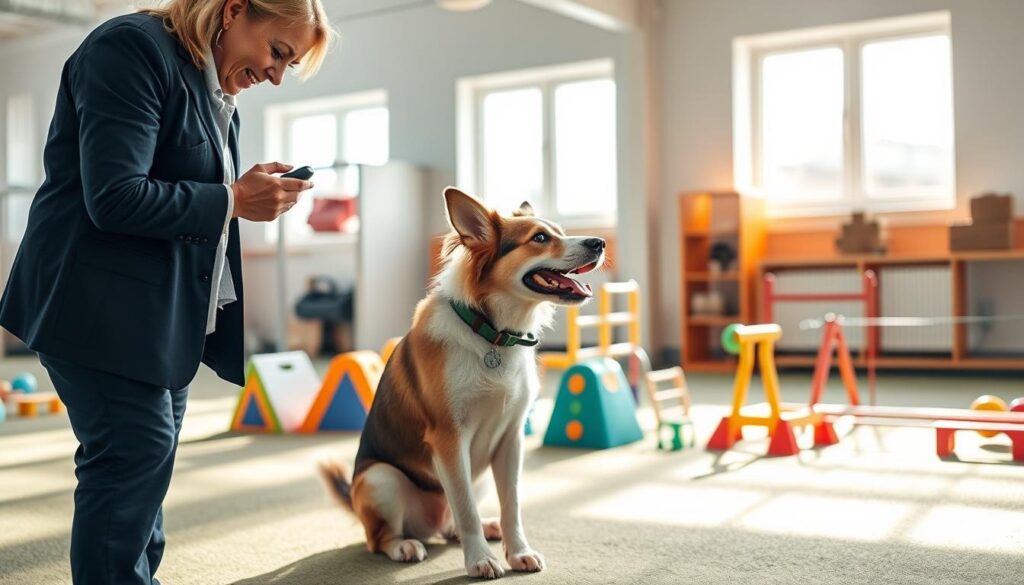
Cognitive Discrimination Tasks
Discrimination tasks teach your dog to tell items apart by shape, texture, or other cues. These exercises improve decision-making speed and accuracy.
Shape and Color Recognition
While dogs see color differently than humans (they perceive blues and yellows more clearly than reds), they can learn to discriminate between distinct shapes and high‑contrast colors. Start with clear visual differences and pair each target with a reward. Progress slowly and always reinforce correct choices.
Quantity Discrimination
Quantity tasks ask a dog to choose between different numbers of items (for example, two treats vs. three). Begin with large, obvious differences and reward correct selections. This trains attention to detail and can be a playful way to practice decision-making under mild cognitive load.
| TaskDescriptionBenefit | ||
| Shape Recognition | Identifying different shapes | Enhances problem-solving and visual discrimination |
| Color Recognition | Distinguishing between high-contrast colors | Improves cognitive flexibility |
| Quantity Discrimination | Choosing between different numbers of items | Develops decision-making and attention |
Social Cognition and Perspective Taking
Social cognition exercises help dogs read human cues and other dogs’ behavior. Activities that encourage dogs to wait for a human signal, follow a pointing gesture, or take turns in play build empathy-like responses and smoother social interactions.
Note on sources: advanced cognitive claims are best supported by peer-reviewed research. Replace the placeholder quote below with a verifiable citation if publishing; otherwise, consider rewording to reference “leading canine cognition researchers” rather than a specific, unverified individual.
“The more we understand about canine cognition, the more we can tailor our training methods to meet their unique needs, enhancing their mental health and our bond with them.” – Dr. Jane Smith, Canine Cognition Expert
Troubleshooting tips: if your dog struggles with advanced tasks, break lessons into smaller steps, shorten sessions, and increase rewards. Not every dog will excel at every advanced skill—individual temperament, breed traits, and prior experience all shape what a dog finds motivating and learnable.
Breed-Specific Dog Brain Training
Tailoring brain training to your dog’s breed, life stage, and physical needs makes sessions safer and more effective. While breed tendencies can guide your choices, always consider your individual dog’s temperament and health before starting a new activity.
Working Breeds (Herding, Hunting, Guard Dogs)
Working breeds often thrive on task-oriented challenges that mimic their original jobs. These dogs usually enjoy activities that combine physical and mental demands.
Task-Oriented Brain Games
- Short obstacle sequences that simulate real tasks (low-impact, focused runs rather than long jumps)
- Problem-solving drills that require decision-making under mild pressure
- Memory games that reinforce multi-step commands
Simulated Work Activities
Agility-style drills and scent work are excellent—but check fitness and joint health first. A basic starter: a 5‑minute task circuit (weave poles, target touch, short recall) repeated twice with breaks builds focus without overdoing physical strain.
Companion and Toy Breeds
Small companion dogs benefit from short, high-value brain sessions that fit their energy and attention span.
- Interactive puzzle toys with adjustable difficulty
- Hide-and-seek mini games inside the house or a quiet room
- Two 5‑minute play-and-train bursts per day to keep skills sharp
Brachycephalic and Special Needs Dogs
Dogs with short noses (brachycephalic breeds) and dogs with mobility or sensory limitations need lower-intensity, carefully monitored activities. Keep sessions very short, allow frequent breaks, and avoid exercises that raise core temperature or demand strenuous breathing.
Before beginning breed-specific training, follow a quick vet/safety checklist: confirm medical clearance for agility or running, account for age-related limits, and choose low-impact alternatives (scent work, puzzle toys, short memory tasks) when needed. Tailoring sessions this way ensures every dog can enjoy brain training safely.
Creating a Dog Brain Training Schedule
A simple, consistent dog brain training schedule makes it easy to fit mental stimulation into your day. Short, regular sessions improve focus and cognitive skills without taking much of your time.
Daily Mental Stimulation Routines
Aim for two short brain sessions per day: a quick morning warm‑up and a calming evening activity. These tiny investments (5–15 minutes each) keep your dog’s attention sharp and reduce boredom between walks.
Morning Brain Warm-Ups
Start the day with active problem-solving to wake your dog’s mind. Try a 5–10 minute food puzzle or a short hide-and-seek with treats to set a focused tone for the day.
Evening Cognitive Cool-Downs
Finish the day with lower-energy challenges—scent work, gentle obedience drills, or a short memory game. These activities keep the brain engaged while helping your dog relax before bedtime.
Balancing Physical Exercise and Brain Work
Balance is key: pair physical exercise with mental challenges so your dog gets both outlets. For example, follow a 20–30 minute walk or short agility play session with a 5–10 minute puzzle toy or scent game. Always factor in your dog’s age and health—check with your vet before starting strenuous exercise or agility training.
| Activity TypeExamplesBenefits | ||
| Physical Exercise | 20–30 min walk, running, fetch, agility (age/health permitting) | Burns energy, supports fitness |
| Brain Work | 5–15 min puzzle toys, scent work, obedience drills | Improves skills, reduces boredom |
Sample 1‑Week Schedule (time & minutes)
Here’s an easy template you can customize to your dog’s needs:
- Mon: Morning — 10 min puzzle; Evening — 5 min scent game; Walk 25 min
- Tue: Morning — 5 min cup game; Evening — 10 min calm obedience; Walk 30 min
- Wed: Morning — 10 min treat-dispensing toy; Evening — 5 min impulse control; Walk 20 min
- Thu: Morning — 5 min object-name drills; Evening — 10 min scent cool-down; Walk 30 min
- Fri: Morning — 10 min DIY puzzle; Evening — 5 min memory game; Walk 25 min
- Sat: Active play + short agility practice (age/health permitting); Evening — 10 min puzzle
- Sun: Recovery day — gentle walk, light scent play, short bonding session
Tracking Progress and Increasing Difficulty
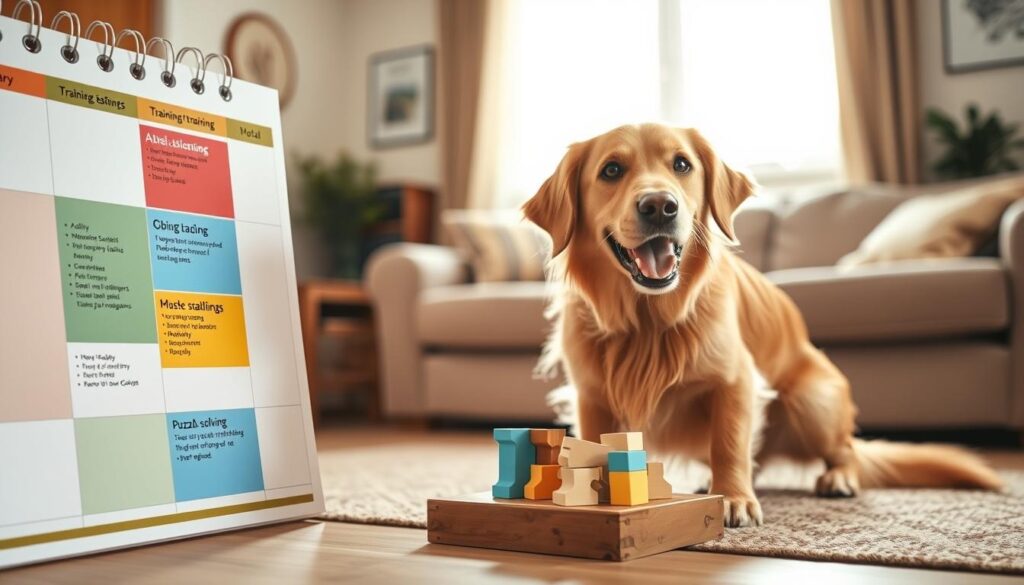
Record small metrics after each session to track gains and adjust difficulty. A simple log works well: date, activity, duration (minutes), success rate (e.g., 4/5 finds), and notes. Increase difficulty when success rates consistently exceed 80%—add more hiding spots, longer delays, or more challenging puzzles.
Troubleshooting Common Challenges
Training takes patience and the right tweaks. If sessions stall or your dog loses interest, small changes in environment, timing, or rewards usually fix the problem quickly.
Working with Easily Distracted Dogs
Some dogs are naturally distractible—especially puppies and high-energy breeds. Use environment management and predictable routines to help them focus.
Environment Management Strategies
- Choose a quiet, distraction-free area for training (a spare room or a corner of the house).
- Keep sessions short at first—5–10 minutes—then build up as attention improves.
- Use clear signals and positive reinforcement to redirect attention (marker word like “yes” or a clicker).
Building Focus in High-Energy Dogs
High-energy dogs often benefit from some physical exercise before training, but avoid heavy activity right after meals and on very hot days. A brief run or play session helps burn excess arousal so your dog can concentrate.
- Do a 5–10 minute active play or short walk before training (timing depends on age and fitness).
- Use high‑value rewards—small soft treats, a tiny piece of cooked meat, or a favorite toy—for difficult tasks.
- Gradually increase training time as focus improves, aiming for multiple short sessions rather than one long one.
Overcoming Frustration and Giving Up
If your dog (or you) is getting frustrated, pause and simplify the task. Frustration often comes from tasks that are too hard or sessions that last too long.
Signs Your Dog is Mentally Fatigued
- Loss of interest or refusal to engage
- Increased errors, hesitation, or avoidance
- Yawning, lip-licking, or turning away
Adjusting Difficulty Levels Appropriately
Lower the difficulty, reward small progress, and finish on a success to keep motivation high.
- Break complex tasks into smaller steps and reward each step.
- If your dog shows fatigue, stop the session and try again later.
- Keep a maximum session cap for puppies (5–7 minutes) and adjust upward for adults as tolerance allows.
Adapting Training for Different Personality Types
Every dog is unique—some are social and food-motivated, others are independent or toy-driven. Tailor rewards and pacing to personality.
Quick owner scripts to refocus or calm a dog: a soft “look” to regain attention, “easy” while presenting a low-value reward for calm, or a brief walk break if overstimulated. Monitoring treat time and calories helps keep training safe—use kibble or tiny pieces for repeated rewards.
Measuring Success in Dog Brain Training
To evaluate whether dog brain training is working, watch your dog’s behavior over time and track small, measurable wins. Success is as much about steady improvement and engagement as it is about mastering a single trick.
Behavioral Indicators of Improved Cognition
Look for clear, observable changes that indicate learning and mental growth:
- Increased problem-solving abilities (faster puzzle solves)
- Enhanced memory recall (fewer repetitions needed to remember a command)
- Better focus and attention span during short sessions
| Behavioral IndicatorDescription | |
| Problem-Solving Abilities | Your dog solves puzzles or completes tasks more quickly and with fewer prompts. |
| Memory Recall | Your dog remembers commands or object names after longer breaks. |
| Focus and Attention | Your dog sustains attention for longer, with fewer distractions. |
Setting Realistic Goals and Expectations
Set small, time-bound goals that match your dog’s age, breed, and temperament. Example short-term goals: “Cup game—find treat in under 30 seconds on 3 out of 5 trials” or “learn one new object name in two weeks.” These realistic targets keep training fun and achievable.
Tracking Progress: Simple Template
Use a quick log after each session to track trends and decide when to increase difficulty. Copy this template:
- Date
- Exercise (e.g., cup game, scent search)
- Duration (minutes)
- Success metric (e.g., 4/5, time to solve)
- Notes (energy level, distractions, next step)
Celebrating Small Victories and Next Steps
Celebrate short wins—small rewards and praise reinforce progress and motivation. Combine mental stimulation with occasional physical exercise to keep your dog balanced, and progressively raise challenge levels when success rates exceed about 80%.
Conclusion: Nurturing Your Dog’s Cognitive Potential
Helping your dog grow smarter is a rewarding, practical journey that deepens your bond and improves everyday behavior. By adding short, consistent brain training to your routine, you boost your dog’s cognitive skills, confidence, and overall happiness.
Dog brain training is more than entertainment — it’s a targeted way to keep your dog’s brain active through puzzle toys, scent work, interactive games, and structured training. Choose the methods that fit your dog’s needs and energy level to get the best results.
Ready to start? Try a quick 5‑minute find‑the‑treat game tonight: hide three treats in easy spots, cue “find it,” and reward each success. Track the time and success rate to see progress over the week.
Small, regular efforts add up. Keep dog brain training fun, varied, and part of your daily life, and you’ll see steady gains in skills and a stronger bond.
FAQ
Quick-start 5‑minute game: Hide three small treats around a room, cue “find it,” and time how long your dog takes. Repeat twice — this gives an immediate mental workout and a baseline to track progress.
What is dog brain training, and how does it work?
Dog brain training uses puzzles, scent games, memory tasks, and focused drills to give your dog mental stimulation. Short, reward-based sessions teach your dog to solve problems, follow cues, and build new skills through repetition and positive reinforcement.
What are the benefits of dog brain training?
Brain training helps dogs stay engaged, reduces boredom-related behaviors, and can improve memory, focus, and confidence. It also strengthens your bond with your pet by creating cooperative, rewarding interactions.
What types of activities are considered dog brain training?
Common activities include puzzle toys, treat-finding games, nose work (scent games), object-name drills, and short sequencing commands. Mix games and formal training to keep sessions varied and motivating.
How often should I do dog brain training with my dog?
Aim for short sessions twice daily — about 5–15 minutes each — adjusted for your dog’s age and energy. Puppies may do 3–5 minute bursts, while adult dogs can handle longer, slightly more challenging drills. Mix brain work with physical exercise and play.
Can dog brain training be adapted for different breeds and ages?
Yes. Tailor difficulty, session length, and activity type to your dog’s breed, health, and temperament. Working breeds may enjoy longer, task-based games; toy breeds often do best with quick puzzle toy sessions. For seniors or dogs with special needs, choose low-impact activities like simple scent work or gentle memory games.
How do I know if my dog is enjoying dog brain training?
Signs of enjoyment include eager engagement, wagging tail, quick responses, and returning to the game. If your dog retreats, yawns repeatedly, or avoids the task, shorten the session and simplify the activity. Keep training positive and end on a success.
Can dog brain training help with behavioral issues?
Yes, for many dogs. Regular mental stimulation reduces boredom and can decrease behaviors like destructive chewing or excessive barking. For serious behavior problems, combine brain training with guidance from a certified trainer or veterinary behaviorist.
Are there any specific dog brain training techniques for puppies?
Puppies benefit from very short, frequent sessions that focus on socialization, simple problem-solving, and exposure to new games and sounds. Start with 3–5 minute play-training bursts, use tiny low-calorie treats, and gradually build duration as attention improves.If you want deeper answers or sources, consult a local vet, a certified dog trainer, or research reviews in journals like Animal Cognition for studies on specific techniques.